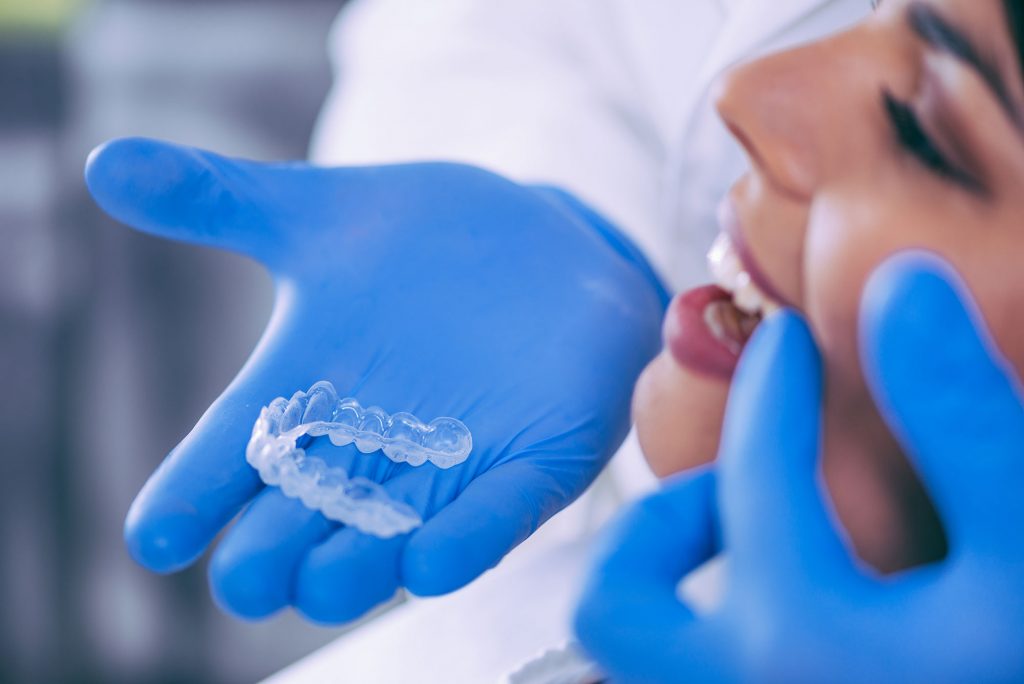
Like skin tone, each of us has a unique color of teeth, which is genetic and natural. The shade over the years accumulates remnants of dyes and extrinsic stains, and if we lighten the teeth, we will get to see them again in the original shade. It is important to understand that there is no intention to reach a white color but to get to your personal hue which is free from food and drink stains.
Many ask if the teeth whitening process is harmful to the outer layer of the teeth. So, let’s get familiar with the enamel, the layer that protects the tooth, which is also the hardest tissue in the human body.
Enamel consists of 98% inorganic material and 1% organic matter. Water is another ingredient. The inorganic substance contains mainly calcium and phosphorus ions, and together they form a strong crystal called hydroxyapatite. The strong crystal empowers resistance to strong chewing forces. On the tooth surface there is a constant dynamic of disengagement of microscopic crystals with constant bathing of the saliva to the tooth. Saliva helps flush the mouth and is also a supplier of minerals essential for the protective layer of the tooth

So what exactly are the stains on the teeth?
What can be done to remove them without damaging the enamel layer?
There are many sources of stains that stick to teeth. We enjoy food and drink like coffee or tea and some smoke and sometimes these are drugs or antibiotics. Hidden in those sources are chemical ingredients that form a pigment and these ingredients are called polyphenols. In India for example polyphenols are used in the textile industry for dyeing fabrics. Pomegranate peel, for example, is very rich in tannins and polyphenol and is used by Indian manufacturers to dye cotton.
In fact, under the definition of polyphenol are so many substances that some would argue that the definition of polyphenol is insufficient. At the same time there is a consensus, that these are natural substances, whose chemical composition is shaped like a ring. It is important to understand that it is ring-shaped because actually that is the weak point of the dyes. If we attack the material and open the ring, we will be able to disassemble the dye and its adhesive ability.
Many years ago, the Romans used goat’s milk and urine to whiten their teeth. sounds strange? Not entirely. Urine contains ammonia and to this day we use ammonia for example to clean our homes. We do not recommend using urine or ammonia to clean teeth, today there are more convenient and less smelly options.
Nowadays, teeth whitening products can be divided into two main types. One is the abrasive, for example toothpastes, which contain chemicals, which remove stains and stubborn residue from the teeth by mechanical means. The second type contains hydrogen peroxide, which chemically bonds to dyes, to the ring of polyphenol to be exact.
Let us dive a little into chemistry. hydrogen peroxide is like a thief stealing electrons. The annular structure of the dye decays because some of the electrons surrounding the ring were tempted to move to another cluster of atoms. So, the neat structure falls apart and now the big molecule has crumbled and reflects less light, meaning the color effect is weakened.
As mentioned, the enamel layer consists mainly of calcium and phosphorus ions. So, is the action of teeth whitening harmful to the tooth and its outer layer? The answer is no, because the hydrogen peroxide fails to break down the crystal that makes up the enamel, the inorganic components are not built like a ring and in addition, the crystal is a regulated structure that is not sensitive to the radical oxygen that attacks it.
Today you can find many methods for teeth whitening. Some show more beautiful results and some less. You can find results that are stable and the teeth remain clear for months and there are methods that are less stable. Dr. Strauss’ clinic has introduced an innovative machine that achieves tooth whitening in an amazing way and the results remain stable for a far longer period of time than any other system that presently exists. This is a machine called TheraSmile and patients enjoy amazing results on a single visit to the clinic.
The measurement of whitening quality is done using a scale of shades that measures shades from gray and yellow to light and white. At the visit to our clinic, each patient’s teeth shade is first measured and determined and after whitening the new shade obtained is measured. The results obtained are nothing short of amazing. Not only in terms of the number of shades the process was able to bring down the scale, but also in the stability seen six months and even a year after treatment.
How come TheraSmile’s method is so successful?
Here for you is a domestic example: If we wash the floor in the living room, we will drag a rag on the stain. We will wash and repeat the operation. Imagine a situation where we put the mop with the rag on the stain and do not move. Stand with the squeegee over the stain and let the detergent do the work. Sounds less effective? This is actually the fault that TheraSmile is trying to avoid. If cleaning a surface, it is desirable that the detergent passes over the stain and washes it and then again, if you want to be effective, another layer of rinsing and then again detergent. The more rinses, the greater the efficiency. That is why the TheraSmile apparatus has two pipes. The one that injects the detergent, the hydrogen peroxide, and the other that washes the teeth. This action allows the hydrogen peroxide to attack the organic substances that cause dyeing and then immediately rinsing. Then again, attacking the dyes and again rinsing and repeating for some cycles. In other words, there is a dynamic constant flow of peroxide over the teeth compared to a static and stagnant application.
TheraSmile‘s system is closed and wraps around the teeth. This enables two important things. One is that the hydrogen peroxide does not evaporate into the oral cavity and the substance remains in the dental environment and the effect of teeth whitening increases. Another thing is that the closure protects against damage to the gums and soft tissues.
After whitening, the doctor applies vitamin E to the soft tissues around the mouth, such as the gums and lips. Why vitamin E? In our body there are many processes that take place and they are triggered by enzymes. The enzymes are a delicate group of atoms that can be broken down by an active and destructive factor such as oxygen. Oxygen attracts electrons and that is why we hear about good substances that are in vegetables that are antioxidants, for example. They protect the body and the delicate processes. One of these protectors is vitamin E. Vitamin E has the ability to bind the radical oxygen to it and neutralize it. In the context of the whitening process, the oxygen from the hydrogen peroxide will be neutralized by vitamin E which will protect the soft and delicate tissues above the teeth.